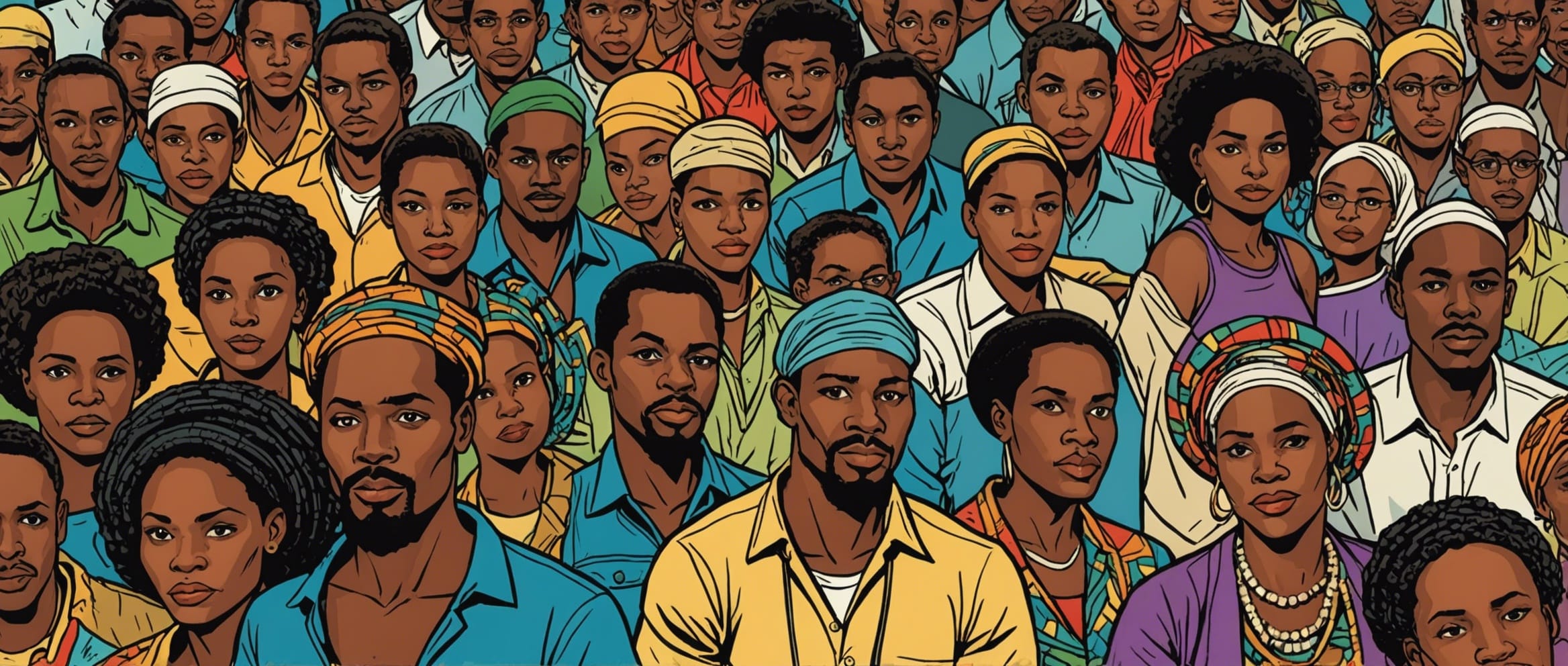
The Sacred Scapegoats
Ah, Africa, the continent where God is always on the ballot and tribalism is the unofficial Ministry of Identity. If you listen closely, you’ll hear the sermon and the slogan echoing in perfect harmony: “Vote for me, I am chosen,” followed swiftly by, “And remember, your cousin from the other tribe is probably plotting your downfall.”
Sobukwe, that inconvenient prophet of African dignity, warned us that liberation without intellectual emancipation is just a change of uniform. He saw through the holy smoke and tribal drums, recognizing that when leaders wrap themselves in divine endorsement and ancestral loyalty, they’re not leading a nation, they’re managing a flock. And flocks, as we know, don’t question the shepherd, they just get sheared.
Etounga, ever the cultural surgeon, diagnosed the syndrome with precision. He didn’t blame colonialism for everything, he blamed us for keeping its furniture. He pointed out that when power is inherited through bloodlines and blessed by pulpits, governance becomes a family business with divine branding. The result? A continent rich in resources but poor in imagination, where poverty is not a failure of economics but a triumph of manipulation.
Libertarianism, that rude guest at the dinner table of tradition, suggests something radical: that people should be free to choose their leaders without consulting their ancestors or their pastor’s political preferences. It proposes that maybe, just maybe, the citizen should come before the clan, and the constitution before the catechism.
The cultural adjustment needed is not a revolution, it’s a reboot. Africa must stop outsourcing its moral compass to the heavens and its political loyalty to the village. It must teach its children that questioning authority is not heresy, it’s citizenship. That belonging to a tribe is beautiful, but being trapped by it is tragic. That God may bless a nation, but He does not write its budget.
Imagine an Africa where leaders earn respect through competence, not charisma. Where elections are won with ideas, not incense. Where tribal identity is a source of pride, not a political GPS. That Africa would not just survive, it would thrive—because it would finally be led by people who fear failure more than they fear losing divine endorsement.
So let us retire the sacred scapegoats and ancestral alibis. Let us build a continent where God is worshipped, but not weaponized, and where tribes are honoured, but not politicised. Because poverty is not our destiny, it’s just bad leadership with good excuses.